
Views: 0 Author: Site Editor Publish Time: 2026-09-01 Origin: Site


Modern engineering constantly battles gravity. Industries must reduce structural weight to improve operational efficiency. Heavy components drain fuel. They limit cargo payloads. They complicate handling and installation. Yet, you cannot sacrifice structural integrity to save weight. You also cannot increase long-term maintenance overhead.
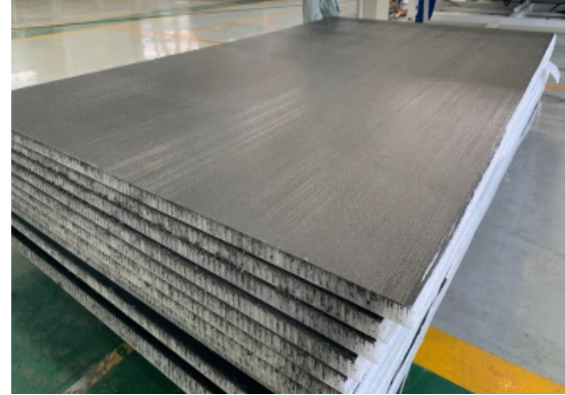
Enter the CFRT honeycomb panel. CFRT stands for Continuous Fiber Reinforced Thermoplastic. This specific structural composite directly solves the weight-to-strength dilemma. It replaces heavy metals and fragile woods in demanding environments.
This guide unpacks exact commercial use cases. We will explore ROI factors and critical surface variations. You will learn how to evaluate this material objectively. You can then decide if it fits your specific project requirements.
CFRT honeycomb panels utilize a thermoplastic sandwich structure to achieve an exceptional strength-to-weight ratio, ideal for commercial logistics and construction.
Specific surface finishes—such as flat or anti-skid—dictate the panel's end-use in either structural walls or high-traffic flooring.
Compared to traditional plywood or metal, CFRT offers superior moisture resistance and impact tolerance, though initial tooling and joining methods require specific engineering considerations.
Adoption success relies on verifying core material density and skin-to-core consolidation quality during the procurement phase.
You must understand the technical baseline before jumping into applications. A composite panel acts as a system. Every layer performs a specific mechanical function. When engineered correctly, the sum becomes vastly stronger than its individual parts.
The outer layers consist of Continuous Fiber Reinforced Thermoplastic (CFRT). Traditional plastics often use short, chopped fibers. Short fibers provide minimal tensile reinforcement. Continuous fibers stretch unbroken across the entire matrix. They offer drastically higher impact resistance. They provide immense tensile strength. This skin acts as the primary load-bearing face. It handles external forces and prevents punctures.
A Polypropylene Honeycomb Core sits between the rigid skins. This cellular geometry mimics natural honeycomb structures. The vertical cell walls absorb kinetic energy effectively. This design significantly reduces overall weight. At the same time, it maintains strict panel rigidity. The core essentially separates the skins. This separation exponentially increases the bending stiffness of the panel without adding heavy mass.
Manufacturers join these layers using thermal fusion. This creates a true sandwich structure. Both the skin and the core utilize thermoplastic polymers. Heat melts them together. They bond permanently without requiring liquid adhesives. This eliminates the risk of volatile organic compound (VOC) emissions. It also severely reduces delamination risks. Adhesive-bonded panels often peel apart under stress. Thermally fused panels perform as one solid unit.
Engineers do not buy materials. They buy solutions to business problems. Understanding where this composite excels helps map its features to direct commercial outcomes.
The transport industry faces strict regulatory weight limits. Heavy truck bodies limit available payload capacity. They also decrease overall fuel efficiency. Every kilogram spent on the vehicle body is a kilogram stolen from profitable cargo.
Fleet operators use these panels for dry freight trailer walls, roofs, and doors. The material creates a rigid, lightweight box. Evidence shows a measurable return on investment here. Operators see an immediate payload increase. They also record notable fuel savings compared to traditional steel or Fiberglass Reinforced Plastic (FRP). The lighter upper structure also lowers the vehicle's center of gravity. This improves handling on highways.
Construction sites abuse materials. Traditional plywood scaffolding boards rot quickly. They warp under rain exposure. They require frequent replacement. Degraded wood poses severe safety hazards to workers climbing high structures.
Thermoplastic composites serve as highly durable scaffolding planks. They also work perfectly as temporary flooring. The primary evidence node here is the zero-water-absorption characteristic. Polypropylene does not soak up rain or humidity. It delivers predictable durability versus traditional timber. Site managers avoid unexpected breakages. They also reduce the volume of discarded wood sent to landfills.
Global supply chains depend on returnable transit packaging (RTP). Cardboard degrades quickly after a few trips. Solid plastic injection-molded crates are too heavy for large-scale logistics.
Manufacturers form these panels into collapsible, heavy-duty crates. They also build specialized flight cases for sensitive electronics. The focus remains strictly on weight reduction for air and freight logistics. Lighter crates cost less to ship back empty. The impact resistance protects valuable cargo during rough transit.
Different applications demand different external textures. The manufacturing process allows for precise surface customization. You must align the surface finish directly to your operational environment.
A Flat Surface Honeycomb Panel provides a smooth, uniform exterior. This finish is best for truck side walls, interior partition panels, and structural enclosures.
Why choose this finish? Smooth surfaces are optimized for aerodynamics on moving vehicles. They reduce drag. They also allow for incredible ease of cleaning. Logistics companies can easily apply corporate decals, vinyl wraps, or UV-resistant coatings. The continuous flat skin ensures a seamless, aesthetic finish. It looks professional while hiding the internal cellular structure completely.
An Anti-skid Surface Honeycomb Panel offers distinct safety advantages. This variant is best for scaffolding platforms, commercial truck flooring, and temporary event flooring.
Why choose this finish? It features a highly textured, high-friction finish. Manufacturers apply this texture directly during the thermal consolidation process. It will not peel off like aftermarket grip tape. It directly replaces heavy diamond-plate aluminum. It also replaces rubber-coated plywood. The textured grip ensures occupational safety in wet, muddy, or snowy conditions. Workers maintain stable footing on elevated scaffolding or inside loading bays.
Objective evaluation requires clear comparison dimensions. No material is perfect. You must balance the physical claims against real-world limitations.
Engineers evaluate materials using the specific modulus. This measures stiffness divided by density. Think of it as "usable strength per kilogram." CFRT vastly outperforms traditional thermoset FRP and standard plywood in this metric. A composite panel might weigh 40% less than a plywood sheet of identical thickness. Yet, it can support similar or greater bending loads. This high specific modulus makes it a premium choice for aerospace, automotive, and logistics.
Thermoplastics excel in hostile environments. They offer complete moisture resistance. They never rot. They resist most industrial chemicals, acids, and alkaline solutions.
However, we must remain objective about impact behaviors. The material is highly impact-resistant. It absorbs blunt force beautifully. But it reacts differently to sharp-point impacts than thermoset FRP. Thermoset FRP tends to shatter or crack under heavy strikes. CFRT is ductile. It may dent under severe, sharp-point impacts. The panel will likely remain structurally intact, but the cosmetic dent will persist.
Corporate ESG (Environmental, Social, and Governance) compliance drives modern procurement. Traditional thermoset materials contain irreversible chemical bonds. You cannot melt them down. They generally end up in landfills.
Because these panels are 100% thermoplastic, they are fully recyclable. At the end of their lifecycle, facilities can shred them. They can melt the shredded matrix and repurpose the polymers. This significantly reduces commercial disposal costs and aligns with global sustainability targets.
Material Comparison Chart: Mechanical & Environmental Profiles
| Material Type | Weight Profile | Moisture Resistance | Impact Behavior | End-of-Life Recyclability |
|---|---|---|---|---|
| CFRT Honeycomb | Ultra-Light | Excellent (Zero Absorption) | Ductile (May dent, won't shatter) | 100% Recyclable |
| Thermoset FRP | Medium | High | Brittle (May crack/shatter) | Non-recyclable (Landfill) |
| Marine Plywood | Heavy | Low (Requires coating) | Splinters under high stress | Biodegradable / Combustible |
| Diamond-Plate Aluminum | Very Heavy | Excellent | Dents permanently | Highly Recyclable |
Integrating new composites requires adjustments. If you treat a honeycomb panel exactly like a piece of solid wood, your assembly will fail. You must mitigate specific implementation risks.
You cannot use standard wood screws. Standard fasteners rely on solid mass for thread engagement. If you drive a standard bolt through a cellular core and tighten it, you will crush the honeycomb structure. The panel will collapse locally.
Structural assembly requires specific techniques:
Insert Potting: Injecting epoxy or structural foam into specific core cells before drilling.
Specialized Rivets: Using wide-flange blind rivets or structural composite fasteners.
Edge-Banding: Capping the raw edges with solid profiles to provide mounting points.
We must provide transparent assumptions regarding heat. Polypropylene is a robust, versatile plastic. However, it is fundamentally a thermoplastic. It softens under extreme heat.
Continuous exposure to extreme high heat can compromise structural rigidity. If the ambient environment consistently exceeds 80°C (176°F), the core may begin to lose its compressive strength. It is not suitable for high-heat industrial zones, oven enclosures, or areas directly adjacent to heavy exhaust systems. Always verify operating temperatures before specification.
The global market features vastly different quality tiers. You must know what to look for on a technical data sheet (TDS). Beware of cheap imports. Some manufacturers use adhesives to bond the skin to the core instead of thermal fusion. Adhesives add weight, emit odors, and eventually delaminate.
Follow these numbered steps when evaluating a supplier:
Check the fiber volume fraction. Higher continuous fiber content yields higher tensile strength.
Verify the core cell size. Smaller honeycombs provide better crush resistance but add slightly more weight.
Inspect the thermal bonding quality. Request physical samples. Try to peel the skin away from the core using pliers. A true thermal bond will resist peeling entirely.
A CFRT honeycomb panel is not a universal replacement for all structural materials. It remains a targeted, highly engineered solution. It dominates in weight-critical, high-moisture, and high-impact environments. Replacing traditional wood or solid metal yields significant operational advantages, provided you respect the material's mechanical boundaries.
To move forward, you should define your exact load requirements first. Choose the right surface finish based on your environment. Decide if you need smooth aerodynamics or anti-skid safety. Finally, request physical samples and technical data sheets from reputable manufacturers. Test your planned joining methods on these samples before committing to a full-scale production run.
A: Yes, standard circular saws with fine-toothed carbide blades work well. However, cutting exposes the internal cellular structure. Edge sealing is strictly required after cutting to prevent moisture ingress and dirt from clogging the open core cells.
A: Standard FRP is typically a thermoset plastic. It cannot be melted down and can be quite brittle under heavy impacts. CFRT is a thermoplastic. This makes it highly impact-resistant, fully recyclable, and capable of being thermoformed or welded using heat.
A: Edges are typically sealed via ultrasonic welding. Manufacturers can also use hot-press folding, which melts the top skin over the exposed edge. Alternatively, you can apply rigid thermoplastic edge-banding profiles to protect the core from debris.