
Views: 0 Author: Site Editor Publish Time: 2026-08-11 Origin: Site


The stringent industrial mandate to reduce structural weight across the transportation, marine, and architectural sectors requires materials that maintain mechanical integrity, fatigue resistance, and acoustic performance. Engineering teams face constant pressure to optimize mass without sacrificing load-bearing capabilities. Traditional core materials force manufacturers to accept significant operational trade-offs. Balsa wood absorbs moisture and rots over time. PVC struggles with outgassing during high-temperature processing. Plywood adds excessive dead weight. Aluminum honeycomb presents severe bonding challenges and corrosion risks in damp environments.
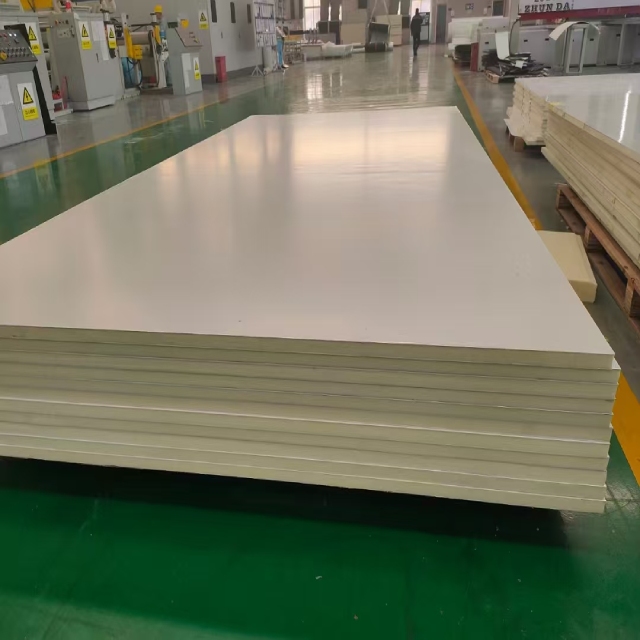
Transitioning to a PET Foam Panel provides a structurally sound, highly engineered alternative that directly addresses these historical trade-offs. This material combines high shear strength, closed-cell moisture resistance, and thermoplastic processability into a single core solution. It offers seamless compatibility with diverse skin materials, allowing you to design lighter, stronger, and more resilient composite structures tailored to demanding environments.
Optimized Strength-to-Weight: PET foam panels deliver high mechanical performance at lower densities, directly supporting payload increases, fuel efficiency, and critical emission reductions in transport applications.
Environmental Compliance: Utilizing a recyclable PET core aligns with strict closed-loop manufacturing mandates and reduces overall carbon footprint compared to thermoset alternatives.
Multi-Functional Performance: Beyond structural rigidity, these cores function as a highly effective thermal insulation panel, a waterproof composite panel, and an acoustic dampening barrier, reducing the need for secondary protective or soundproofing layers.
Processing Flexibility: Thermoplastic properties allow for advanced thermoforming and compatibility with a wide range of resin systems and skin materials (e.g., fiberglass, carbon fiber) without outgassing issues.
Lightweighting in modern composite engineering requires a strict balance between mass reduction and structural performance. The primary engineering objective is to lower the overall weight of a component while maintaining specific stiffness, impact resistance, and load-bearing capacity. Sandwich panel construction relies on the core material to act similarly to the web of an I-beam. It separates the load-bearing skins to exponentially increase bending stiffness without adding substantial mass.
Evaluating core materials requires establishing clear baseline metrics. Density ranges for structural foam cores typically fall between 50 and 200 kg/m³. We assess the shear modulus and compressive strength against these specific densities to determine the optimal strength-to-weight ratio for a given application. A core must resist the shear forces generated when the panel bends, preventing the outer skins from sliding independently under heavy dynamic loads.
The operational impact of this weight reduction drives lifecycle efficiency across multiple sectors. In aerospace and automotive manufacturing, shedding excess mass directly translates to fuel savings and measurable emission reductions. Lighter commercial transit vehicles carry larger payloads while staying within legal axle weight limits. In marine applications, lighter hull structures achieve shallower drafts, higher top speeds, and improved hydrodynamic efficiency.
Polyethylene Terephthalate (PET) is a thermoplastic polymer characterized by its strong ester linkages. Manufacturing structural cores involves an advanced extrusion process that introduces physical blowing agents into the melted polymer. This creates a rigid, closed-cell foam matrix. This cellular architecture defines the physical capabilities of the final panel, dictating how it handles stress in the field.
The internal cellular structure distributes mechanical loads evenly across the panel surface. When subjected to dynamic stress and repeated flexural cycles, the closed-cell matrix absorbs and dissipates energy. This provides exceptional fatigue resistance. It prevents the micro-cracking and structural degradation often seen in rigid, brittle core materials under continuous vibration, such as engine mounts or wind turbine blades.
Standard extrusion processes yield slight variations in cell orientation, resulting in anisotropic properties. The mechanical strength of the foam differs slightly depending on the axis of the applied load. You must account for this by aligning the panel during fabrication to ensure the axis with the highest compressive strength runs parallel to the primary anticipated load path.
A direct, linear relationship exists between the density of the foam and its structural capabilities. As the density increases, the compressive strength, shear strength, and peel strength rise proportionally. Low-density variants prioritize maximum weight savings for lightly loaded panels, while high-density variants handle intense point loads and severe mechanical stress.
Verification of these load-bearing capacities relies on strict testing standards. Laboratories utilize ASTM C365 to measure flatwise compressive strength and ASTM C273 to determine shear properties in sandwich panel constructions. These standardized tests provide the empirical data you need to run accurate finite element analysis (FEA) simulations before prototyping.
Physical limitations dictate the selection process. Pushing the core density beyond 150 kg/m³ often yields diminishing returns regarding weight savings. At higher densities, the core becomes heavy enough that alternative structural designs might prove more efficient. Identifying the exact threshold point where strength meets the minimum weight requirement is critical for optimized panel design.
The closed-cell structure traps gas within the matrix, resulting in a low thermal conductivity (k-value). This inherent resistance to heat transfer allows the material to function as a highly efficient Thermal Insulation Panel. Manufacturers frequently specify this core for refrigerated transport vehicles, reefer containers, and architectural cladding where maintaining strict temperature control is mandatory.
Performance stability across extreme temperature gradients sets this polymer apart from legacy materials. It boasts a significantly higher heat distortion temperature compared to standard PVC foams. The core maintains its structural rigidity and insulating properties even when exposed to harsh direct sunlight or severe freezing conditions on the job site.
Acoustic dampening represents another major performance dimension. The cellular matrix disrupts sound wave transmission, effectively blocking noise propagation. This mitigates Noise, Vibration, and Harshness (NVH) in commercial transit cabins and marine engine rooms. Utilizing the core for acoustic control eliminates the need to install additional heavy soundproofing mats, further supporting the lightweighting mandate.
The continuous closed-cell matrix physically prevents water ingress. Unlike open-cell foams or natural wood products, the internal structure lacks the interconnected voids required for capillary action. Water cannot travel through the core. Even if the outer composite skin sustains localized impact damage or puncturing, the internal matrix remains dry.
This characteristic completely eliminates the risk of core rot. Fungal decay and water degradation represent the most common failure modes for balsa and marine plywood cores. By blocking moisture entirely, the polymer ensures long-term structural viability, functioning as a reliable Waterproof Composite Panel suitable for subsea enclosures, boat hulls, and floating architectural structures.
Zero moisture absorption guarantees consistent panel weight over the entire product lifecycle. Traditional cores absorb ambient humidity and liquid water over time, adding hidden dead weight to the structure. This unintended weight gain degrades fuel efficiency and alters the center of gravity in marine vessels. The closed-cell polymer maintains its exact manufactured weight indefinitely.
The lifecycle of a Recyclable PET Core often begins with post-consumer recycled (PCR) feedstock. Manufacturers clean, shred, and remelt discarded plastic bottles and packaging to extrude new structural foam. This diverts massive volumes of plastic waste from landfills and oceans, integrating it directly into high-value industrial supply chains.
The thermoplastic nature of the polymer ensures true end-of-life recyclability. When a composite panel reaches the end of its operational lifespan, the core can be separated, shredded, and remelted to form new products. This contrasts sharply with cross-linked thermoset foams like polyurethane, which cannot be remelted and typically end up incinerated or landfilled.
The modern foaming process relies on physical blowing agents rather than ozone-depleting chemicals. The manufacturing cycle involves absolutely no Chlorofluorocarbons (CFCs) or Hydrochlorofluorocarbons (HCFCs). This protects the atmospheric ozone layer and ensures compliance with global environmental treaties.
Specifying this material assists Original Equipment Manufacturers (OEMs) in meeting stringent environmental regulations. It supports REACH compliance in the European Union and aligns with ISO 14001 environmental management standards. Utilizing recyclable cores directly supports corporate sustainability goals, providing a measurable reduction in the overall carbon footprint of the final product.
Fiberglass-reinforced polymer panels offer a vastly superior strength-to-weight ratio compared to traditional aluminum and steel plating. Metal structures require heavy internal framing to prevent oil-canning and buckling under load. The composite sandwich panel provides inherent rigidity across large spans without the need for extensive stringers. Furthermore, the polymer core eliminates all risks of galvanic corrosion and rust.
When contrasted with marine plywood, the polymer core demonstrates clear operational advantages. Plywood is exceptionally heavy and prone to delamination when exposed to moisture. The polymer core offers a fraction of the weight, superior longevity, and total immunity to water degradation, making it the definitive choice for modern marine construction.
Cross-linked PVC foam historically dominated the marine and wind energy sectors. However, the thermoplastic polymer core offers superior thermal stability. PVC becomes friable and loses structural integrity at elevated temperatures, limiting its use with high-temperature prepreg resin systems.
Outgassing presents a severe risk with PVC. When heated during curing, PVC can release trapped gases that form massive bubbles under the composite skin, ruining the panel. The stable chemistry of the PET polymer entirely avoids this outgassing risk, ensuring flawless lamination even during high-temperature exothermic curing cycles.
End-grain balsa wood offers exceptionally high shear strength for its weight, making it a legacy favorite for boat hulls. However, balsa suffers from natural variance. Density and strength fluctuate wildly depending on the specific tree and growth conditions. The engineered polymer core provides absolute consistency across every square inch of the panel.
Moisture susceptibility remains balsa's fatal flaw. If water breaches the outer skin, balsa absorbs it rapidly, leading to catastrophic fungal decay and core rot. The waterproof nature of the closed-cell polymer guarantees that minor skin damage will not result in massive structural failure, providing far superior longevity and impact absorption.
| Core Material | Moisture Resistance | Thermoformability | Outgassing Risk | Recyclability |
|---|---|---|---|---|
| PET Foam | Excellent (Closed-cell) | High (Thermoplastic) | None | 100% Recyclable |
| PVC Foam | Good | Moderate | High at elevated temps | Non-recyclable (Thermoset) |
| End-Grain Balsa | Poor (Absorbs water) | None (Rigid) | Low | Biodegradable |
| Marine Plywood | Poor (Prone to rot) | None (Rigid) | None | Low (Adhesive contamination) |
Evaluating material selection requires looking at overall processing efficiency. While initial raw material availability may fluctuate based on recycled feedstock supplies, the processing benefits are substantial. The closed-cell structure reduces resin uptake, preventing the waste of expensive matrix materials during infusion.
Lower scrap rates improve manufacturing throughput. The material cuts cleanly without shattering, and offcuts can often be recycled. Eliminating the need for secondary thermal insulation layers or heavy acoustic dampening mats streamlines the assembly line. Avoiding the complex disposal requirements associated with toxic thermoset materials adds significant operational value to the manufacturing lifecycle.