
Views: 0 Author: Site Editor Publish Time: 2026-09-15 Origin: Site


Commercial transport, RV manufacturing, and modular construction industries face a relentless mandate today. They must aggressively reduce tare weight to improve fuel efficiency. They must simultaneously maximize payload capacity. However, they must achieve these goals without sacrificing structural integrity or thermal performance. Traditional materials like plywood, steel, or standard thermoset fiberglass often fall short. They add unnecessary bulk. They absorb moisture readily. They suffer from brittle degradation over years of heavy use.
A superior composite alternative has emerged to solve these persistent design challenges. This guide dissects the exact material composition of a high-performance CFRT foam panel. We strip away generic marketing claims to reveal the underlying engineering reality. You will learn how to accurately evaluate panel durability, structural limits, and thermal ratings. Our goal is to equip engineering and procurement teams with the concrete facts needed for successful material selection.
A CFRT foam panel is a composite sandwich structure relying on a high-strength thermoplastic skin and a lightweight, insulating foam core.
The Continuous Fiber Reinforced Thermoplastic Skin provides superior impact resistance and recyclability compared to traditional thermoset fiberglass.
Core selection dictates performance: a PET Closed-cell Foam Core maximizes structural sheer strength, while an Extruded Polystyrene Foam Core prioritizes thermal insulation and moisture resistance.
Because the components are thermoplastic, the skin and core can be thermally bonded without chemical adhesives, significantly reducing delamination risks over the panel’s lifecycle.
Engineers design composite panels using a fundamental principle known as the sandwich structure. They separate two high-strength facings with a lightweight, thick core. This separation exponentially increases bending stiffness. It adds minimal weight to the overall assembly. Think of an steel I-beam. The top and bottom flanges handle the main stresses. The web keeps them apart. A composite sandwich panel operates on this exact same structural logic. The outer skins act as the flanges. The inner foam acts as the web.
Each layer in the panel performs a highly specialized structural role. The outer skins handle tensile and compressive stresses. When a heavy load rests on the panel, the top skin compresses. The bottom skin stretches. The inner foam core absorbs shear forces. It prevents the skins from sliding past one another. The core also dictates the thermal and acoustic insulation properties of the assembly. A well-designed core keeps the skins rigidly parallel. This prevents buckling under heavy loads.
Thermoplastic composites offer a massive implementation advantage over traditional materials. Thermoset panels typically require heavy, brittle epoxy adhesives. Manufacturers must apply thick layers of urethane glues to bond the layers. These glues add dead weight. They also become brittle over time. In contrast, manufacturers thermally consolidate CFRT components. They use heat and pressure to fuse the materials together. This creates a monolithic structure. It entirely eliminates the need for liquid adhesives. You save weight and gain tremendous durability.
The outer facings require immense strength to protect the core. A Continuous Fiber Reinforced Thermoplastic Skin utilizes unidirectional (UD) glass or carbon fibers. Manufacturers fully impregnate these fibers with a tough thermoplastic resin. They typically use Polypropylene (PP) or Polyethylene Terephthalate (PET). The process encases every single fiber in plastic. This matrix binds the fibers together. It transfers stress evenly across the entire surface of the panel.
The structural difference between continuous and chopped fibers is severe. Standard fiberglass uses short, chopped strands randomly sprayed into a resin pool. These short strands create weak points. Load paths break constantly. Continuous fibers run unbroken from one edge of the panel to the other. They provide seamless load paths. This unbroken chain results in significantly higher tensile strength. It also delivers massively improved impact resistance compared to standard chopped-strand materials.
Upgrading to continuous fiber skins yields immediate real-world benefits for transport and construction fleets. You can expect three major operational improvements.
Damage Tolerance: The continuous fibers remain highly resistant to puncture and tearing. This proves crucial for logistics trailers and dry freight truck bodies. Forklift impacts simply bounce off the tough thermoplastic matrix.
Repairability: Thermoplastic skins melt when heated. You can reshape or patch them using simple heat welding tools. Thermoset materials require messy, toxic, and time-consuming resin layups for basic repairs.
Compliance and Safety: The thermal lamination process produces zero VOC emissions. This protects factory workers. Furthermore, you can fully recycle thermoplastic skins at the end of their useful lifecycle.
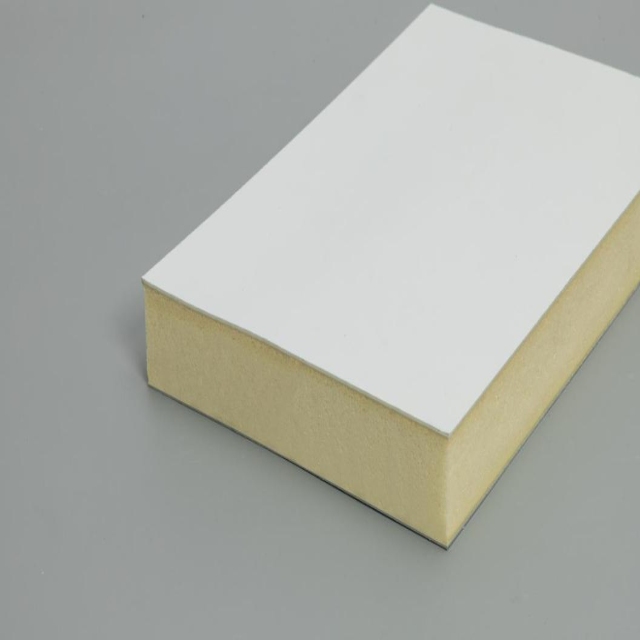
The skin provides the armor. The core defines the function. You must match the inner foam precisely to your operational environment. Incorrect core selection leads to structural failure or poor thermal performance.
A PET Closed-cell Foam Core delivers extreme mechanical resilience. It boasts high mechanical strength. It maintains an excellent shear modulus under heavy stress. PET remains highly stable at elevated temperatures. Manufacturers often extrude it from recycled plastics. This makes it a highly sustainable choice. You should specify PET for load-bearing applications. It excels in commercial flooring systems. It performs flawlessly in dry freight bodies where structural rigidity remains the primary requirement.
An Extruded Polystyrene Foam Core prioritizes climate control. It features an outstanding closed-cell structure. This structure results in near-zero water absorption. It provides superior, consistent thermal insulation. The R-value remains stable over decades of use. XPS stands as the optimal choice for refrigerated transport. It protects cold chain logistics perfectly. It serves well in RV sidewalls. You need XPS in environments where moisture ingress and thermal bridging pose critical risks.
You should also understand alternative market options like Polyurethane (PU) and Expanded Polystyrene (EPS). PU provides decent insulation. However, PU can absorb moisture over time if the skin breaches. PU is also significantly heavier than PET or XPS. EPS is exceptionally lightweight. Sadly, EPS lacks structural shear strength. EPS also struggles during the thermal bonding process. The high heat required to fuse the skins often melts or degrades the EPS core. This leads to weak adhesion.
| Core Material | Primary Strength | Water Resistance | Best Application Use Case |
|---|---|---|---|
| PET (Polyethylene Terephthalate) | High shear and compressive strength | Excellent | Load-bearing floors, dry freight bodies |
| XPS (Extruded Polystyrene) | Superior thermal insulation (R-Value) | Near-Zero Absorption | Refrigerated transport, RV sidewalls |
| PU (Polyurethane) | Good insulation, moderate strength | Moderate (can absorb if breached) | Traditional static cold storage panels |
| EPS (Expanded Polystyrene) | Very lightweight, low cost | Poor | Light packaging, non-structural panels |
Delamination remains the most common failure point in composite sandwich panels. It occurs when the outer skin separates from the inner foam. This separation destroys the structural integrity of the panel. Thermal expansion mismatches cause most delamination. When a truck body sits in the summer sun, the outer skin heats up. The skin expands. The inner core stays cool. This creates massive shear stress at the glue line. Bubbling or catastrophic separation soon follows.
Thermoplastic composites neutralize this threat directly. Combining a continuous fiber skin with a compatible thermoplastic core allows for direct fusion bonding. Heat melts the matrix of the skin into the cellular structure of the core. They become a single, monolithic unit upon cooling. The bond no longer relies on a chemical adhesive layer. This fused structure resists delamination fiercely. It holds together even under extreme road vibration and severe temperature cycling.
Procurement and engineering teams must verify panel quality before purchasing. Do not assume all thermoplastic bonds are equal. Poor factory consolidation leaves dry spots or weak zones. You should request comprehensive testing data from your manufacturer. Ask for peel strength metrics. Request shear fatigue test results. These reports verify the manufacturer’s consolidation process. A high peel strength number proves the skin and core are truly fused.
Material selection must align directly with operational goals. You should evaluate your exact use case before specifying a layup. Different core and skin combinations yield drastically different performance metrics.
Need Maximum Insulation + Light Weight? You should specify a CFRT skin paired with an extruded polystyrene core. This prevents thermal bridging in cold-chain logistics.
Need Maximum Impact Resistance + Floor Load Capacity? You should specify a CFRT skin paired with a closed-cell PET core. This handles heavy pallet jacks and frequent forklift traffic easily.
Need Enhanced Surface Protection? Ask for an added UV-resistant protective film applied directly over the outer skin during consolidation.
You must also consider production realities when designing composite assemblies. Standard thicknesses offer much better economies of scale. Common dimensions like 15mm, 30mm, and 50mm remain readily available. Manufacturers produce these continuously. This keeps costs low and lead times short. Custom layups require unique tooling. Adding more directional fiber layers to the skin certainly increases strength. However, custom designs extend lead times. They also require higher minimum order quantities.
Engineers often make mistakes when transitioning from metal to composites. They try to use traditional mechanical fasteners. Screws and rivets crush the foam core if applied incorrectly. You must use specialized inserts. You can also utilize structural adhesives for joining panels at corners. Always design load-bearing joints to distribute stress widely. Small point loads cause localized crushing. Use broad backing plates whenever you mount heavy hardware directly to the skin.
A composite sandwich panel is only as effective as the alignment between its specific material makeup and its intended use case. Specifying the correct combination of skin and core prevents early structural failures. It also optimizes vehicular payload and insulation efficiency. Thermoplastic materials offer unmatched durability, lighter weights, and total recyclability compared to outdated thermoset options.
Do not rely on generic specification sheets when sourcing materials. Require your manufacturing partners to clearly state the exact fiber orientation. Demand they specify the resin type and foam density in writing. You should request technical data sheets (TDS) early in the design phase. Order physical samples. Conduct internal peel and impact tests. Verify the fusion bond quality before committing to bulk manufacturing orders.
A: Yes. While the continuous fibers are exceptionally strong, they can be machined using standard CNC routers, saws, and waterjets, provided the correct feeds and speeds are used to prevent melting the thermoplastic matrix.
A: Unlike plywood, which absorbs moisture, rots, and delaminates, PET is a closed-cell polymer. It does not absorb water, making it immune to rot and fungal degradation.
A: No. In almost all configurations, CFRT panels are significantly lighter than traditional FRP panels of the same thickness, primarily due to the higher strength-to-weight ratio of the continuous fibers and the absence of heavy resin adhesives.
A: This depends on the specific resin and core. Standard PP-based CFRT skins typically perform well up to 80°C (176°F), while specialized cores like high-density PET can endure the high temperatures required for thermal bonding without structural collapse. Evaluate based on end-use environment.